Reflection: Christmas and the Hour of God
The Seventh Day in the Octave of Christmas
Optional Memorial of St. Sylvester I, Pope
Brief Background:
Saint Sylvester I was pope from 314–335 AD, during a pivotal moment in Church history—the transition from persecution to public acceptance of Christianity under Emperor Constantine. Although he did not personally attend the Council of Nicaea (325), his papacy supported its teachings, especially the affirmation of Christ’s divinity against Arianism. Under Sylvester’s leadership, some of the first great Roman basilicas were built, including the original St. Peter’s and St. John Lateran, shaping the public and liturgical life of the Church for centuries to come. He is remembered as a gentle shepherd who guided the Church through peace after suffering.
St. Sylvester is the patron saint of papal leadership, governance, peaceful transitions and stability in the Church.
REFLECTION:
When I was at Mount Angel Seminary, I had the blessing of sitting in a class taught by Abbot Jeremy Driscoll, OSB—a gifted theologian and liturgist who helped translate the Roman Missal we use today. In one lecture, he spoke about the meaning of “the hour.” It was one of those moments that quietly reshapes how you hear Scripture, pray the Mass, and celebrate Christmas.
He pointed out how, at the Wedding at Cana, Jesus says to His mother, “Woman, my hour has not yet come.” Later, at His Passion, Jesus declares, “The hour has come for the Son of Man to be glorified.” Abbot Jeremy then made a beautiful connection to the Mass. In the Eastern Churches, there is a clearly identified moment when the bread and wine become the Body and Blood of Christ. In the Latin Rite—the West—the Church is more careful. The consecration cannot be pinpointed to this exact second. Instead, it unfolds within the sacred “hour” of the Eucharistic Prayer. The whole prayer, the whole action, the whole event is the moment when heaven and earth meet and Christ becomes truly present.
This understanding helps us see something essential about how God works. God’s saving action is not reduced to a single instant. Christ’s “hour” is not only the moment He breathed His last; it is the entire mystery of His Passion, Death, and Resurrection—one saving movement of love. And in the same way, the “hour” of Christmas is not limited to the moment of Christ’s birth.
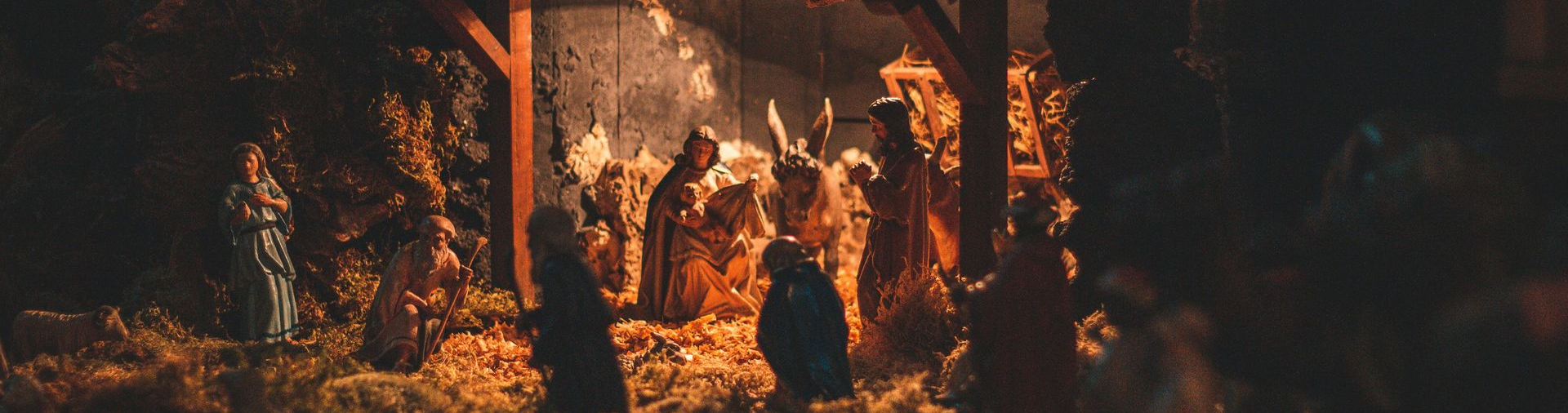
Christmas is an hour, a holy event that unfolds. It begins with the Annunciation and Mary’s yes. It continues through the long months of waiting, the quiet night in Bethlehem, the shepherds who hurry to the manger, and the Magi who travel from afar. All of it belongs together. All of it is God entering our time.
This is why the reading from 1 John tells us, “Children, it is the last hour.” John is not warning us to panic or predicting an immediate end. He is announcing that God’s decisive moment has begun. The Word has taken flesh. Truth now has a face. Light has entered the darkness. From this point on, every heart is invited—indeed, required—to respond.
That is why John also speaks about those who leave, those who deny Christ, and those who remain. Once God has revealed Himself so completely, neutrality disappears. The “hour” reveals what is true—not only about Christ, but about us.
Christmas, then, is not just something we remember fondly once a year. Like the Eucharist, it draws us into God’s saving hour. Just as the whole Eucharistic Prayer leads us into Christ’s real presence, the whole Christmas mystery draws us into the reality of the Incarnation. We do not simply observe it; we enter it.
And as we continue into the last hour of 2025, may we take some time—some sacred moments—to reflect on the events, blessings, struggles, and lessons of this past year. And as we look ahead to 2026, may we do so with hope, attentive hearts, and open eyes, ready to encounter God in new moments and new events, trusting that His saving hour continues to unfold in our lives and in the life of the Church.