
Reflection: Always Forward, Never Back
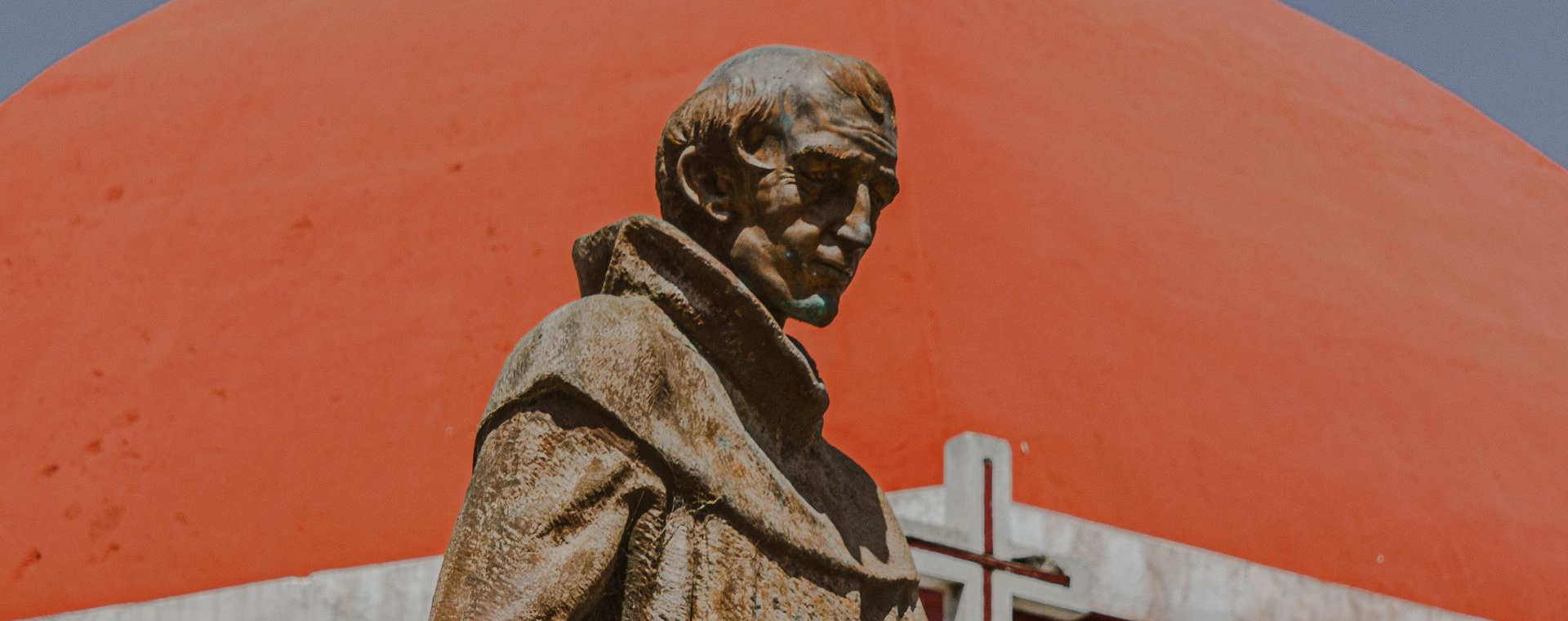
Optional Memorial of Saint Junipero Serra, Priest [United States of America]
Brief Background:
St. Junípero Serra (1713–1784) was a Spanish Franciscan missionary priest who dedicated his life to proclaiming the Gospel in what is now California. He founded nine of the twenty-one California missions, which became centers of evangelization, education, agriculture, and care for local communities. Despite chronic illness, difficult travel, and countless hardships, he remained faithful to his missionary calling and tirelessly served the People of God. He was canonized by Pope Francis in 2015 during the Pope's visit to the United States. Today, St. Junípero Serra is recognized as the patron saint of vocations to Church ministry in California and is also honored as a patron of Hispanic Americans for his enduring missionary legacy.
REFLECTION:
When I was in California during my seminary formation, my class had the opportunity to visit three of the missions founded by St. Junípero Serra. It was a memorable experience. Walking through those beautiful mission churches, praying where generations of Catholics had gathered, and standing where this great missionary served the People of God gave me a greater appreciation for his life and his zeal for evangelization.
As I learned more about St. Junípero Serra, one quote has stayed with me ever since: "Siempre adelante!" — "Always forward; never back."
At first, it sounds like a simple encouragement to persevere. But the more I have reflected on those words, the more I realize they are really about discipleship. St. Junípero Serra understood that the Church cannot simply preserve what has always been. The Gospel is always calling us forward—to deeper faith, greater holiness, and renewed mission.
That is exactly what the prophet Amos is saying in today's first reading.
On the surface, Israel looked like a faithful nation. The people celebrated their religious feasts, offered sacrifices, gathered for worship, and sang songs of praise. Everything appeared healthy. Yet God says something startling: "I hate, I despise your feasts... Let justice roll down like waters and righteousness like an ever-flowing stream."
Why would God reject worship that He Himself had commanded? Because the people had become comfortable simply doing what they had always done. Their worship had become routine rather than transformative. They honored God with their lips, but their daily lives did not reflect justice, mercy, or righteousness. They thought that continuing the same religious practices was enough, while their hearts remained unchanged.
I wonder if Amos is asking us the same question today.
As a parish and as a school, it is very easy to say, "We've always done it this way." We have always had this event. We have always organized this ministry this way. We have always taught this lesson this way. There is certainly value in tradition. The Catholic Church treasures her sacred Tradition. But there is a difference between preserving the faith and simply preserving our routines.
Every parish and every Catholic school must continually ask: Are we helping people encounter Jesus Christ? Are our ministries forming missionary disciples? Are our classrooms forming not only good students but faithful Catholics? Are our meetings producing mission, or are they simply maintaining activity?
As we continue looking ahead to the bicentennial of the Church in Hawaiʻi and the centennial of Maryknoll School, I believe this is an important question for all of us. We should not ask, "How do we get back to the way things used to be?" Instead, we should ask, "Where is God leading us now?"
That is not a rejection of the past. In fact, we honor those who came before us by building upon the strong foundation they left. St. Junípero Serra did not spend his life looking backward. He moved forward with courage, trusting that God was opening new doors for the Gospel.
His words challenge us today: "Always forward; never back."
Forward does not mean changing our Catholic identity. It means becoming more deeply Catholic. It means allowing every Mass, every ministry, every classroom, every committee, and every act of service to lead people into a deeper relationship with Jesus Christ.
That is the kind of worship Amos is calling us to—a worship that does not end when Mass is over, but flows into our homes, our workplaces, our parish, and our school like "justice rolling down like waters and righteousness like an ever-flowing stream."
May we never become content with simply doing things because they have always been done that way. Instead, may we continually ask what God is calling us to become. And with the courage of St. Junípero Serra, may we always move forward, trusting that Christ is leading the way.