Reflection: St. Joseph, The Builder and the Bridge
REFLECTION:
I was in a conversation with one of our Knights of Columbus, sharing some of the plans we have for the rectory—projects, improvements, ideas for the space. And of course, I couldn’t help myself… I added one more vision: a life-like statue of Jesus and the woman at the well.
He looked at me and said, half serious, half joking: “Okay, let’s get St. Joseph to build all of that for you.” We laughed—but the more I thought about it, the more I realized… that’s actually not a bad idea. Because if there’s anyone who understands building—not just structures, but something deeper—it’s St. Joseph.
In the first reading, King David wants to build a house for God. It’s a good and generous desire. But God turns it around: “I will build a house for you.” Not a building of stone, but a living promise—a lineage that will lead to the Messiah. And when that promise is finally fulfilled, God chooses not a king or a powerful figure, but a carpenter. Joseph.
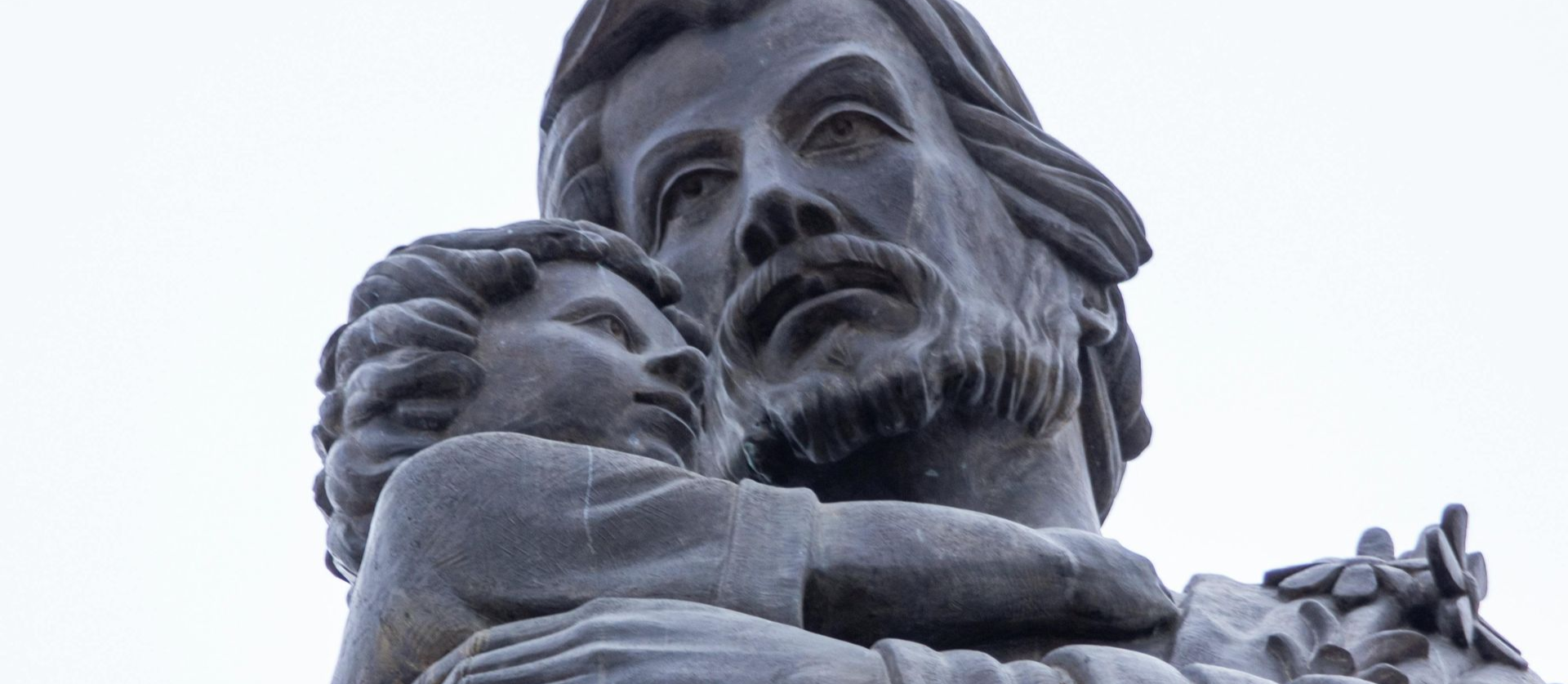
Joseph knew how to build. He worked with his hands. He understood patience, precision, and trust in the process. He knew that real building takes time, care, and quiet consistency. But the most important thing Joseph would ever be part of was not something he built—it was something God was building through him.
Joseph becomes the bridge. The bridge between God’s promise to David and its fulfillment in Jesus. The bridge between prophecy and reality. The bridge between heaven’s plan and an ordinary human home.
Through Joseph, Jesus receives His place in the house of David. Through Joseph, the promise becomes real—given a name, a home, a place in the world. And yet, Joseph does all of this without recognition. He speaks no recorded words in Scripture. He builds no monument. He stands in no spotlight. Instead, we are told simply: “When Joseph awoke, he did as the angel commanded him.” That is his greatness.
Joseph reminds us that God is always building something—but not always what we expect. Like our own plans—whether it’s a rectory project or something in our personal lives—we often focus on what we can see, what we can design, what we can accomplish.
But God is often building something deeper: faith within uncertainty, trust within waiting, love within responsibility. And He does it through people who are willing to be steady, faithful, and open—like Joseph.
This is the invitation of St. Joseph. To shift from asking, “What can I build for God?” to asking, “What is God building through me?” To recognize that sometimes the most important work is quiet, unseen, and hidden in the ordinary moments of daily life. To become a bridge—connecting others to God, even if no one notices the effort it takes.
In the end, Joseph did not build a temple or a grand structure. He built a home. He protected a family. He carried a promise. And through that quiet, faithful work, God changed the world.
So maybe that simple comment from the Knight carries more truth than we realized. If we want something meaningful to be built—in our parish, in our families, in our lives—then yes, let’s look to St. Joseph. Not just to build for us, but to teach us how to let God build through us.